Showing posts with label professional reading. Show all posts

Sunday, November 9, 2025

Reading Awards


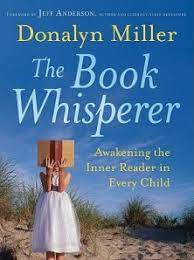
If you haven't read anything by Donalynn Miller, I highly recommend you do.  In her book, The Book Whisperer, she details how she challenged her 6th grade students to read 40 books in a year.  Some kids had read virtually no books the year prior and it felt insurmountable.  But, with her love of reading and books, and her knowledge of the power of books to transform people, her students did it.  And if they didn't quite make it, they still read a significant amount of books and could now see themselves as readers. 

In my kindergarten class, I focus on words instead of numbers of books (they really love seeing how many words are in a book) and since we use Accelerated Reader, keeping track of words read is done for us.  

I designed some different kids of awards to recognize and celebrate reaching achievements.  Happy reading!


Visit my TpT store, A Teacher's Purpose:

Books Read Certificates

Word Count Certificates

Saturday, November 25, 2023

Curriculum is Not the Answer We are Looking For

Curriculum is not the answer to better education.

I said what I said.  I think a good curriculum is necessary for continuity of learning and ensuring equitable instruction across classrooms.  I think that a good part of the day should be spent implementing the curriculum to the greatest extent possible. BUT, I wish I had a dollar for every time a teacher said, "I don't have time in my day for the students to independently read." 

The sad part is, no none listens to that.  LISTEN TO THAT.  We are so busy teaching students all the things they need to be good readers (which is always the goal) and never giving them the chance to actually be readers. In my 24 years in the classroom, my students have excelled in reading and if I have to cut something in my day, independent reading time is NOT an option.  Luckily for me, my administration trusts me and aren't checking to be sure every workbook page is complete and every lesson taught exactly as the curriculum mandates. Every year my student test scores are exemplary, my kindergartners read more than some first grade classes, and my kids love reading time and are voracious readers.  But no one asks my why.  No one comes to watch me working on independent reading with the kids.  Why?  Because they watch me teach the curriculum. That's what our school asks them to do so we can check all the boxes. And I get it.  They spent hundreds of thousands of dollars on our two major curricula.  We need to be using it.  But not as much as anyone thinks.  

At our school, we focus almost entirely on the curriculum: training on the curriculum, grade level norms for the curriculum, common assessments for the curriculum, formal observations for the curriculum.  No one talks about independent reading at my school.  No trainings or professional reading is on independent reading and its power.  No one discusses how to engage students in independent reading. No one is talking about new releases in children's literature, award winners, book circles, setting reading goals, reading challenges, or diverse authors. And, I would bet my salary that most school goals would be accomplished faster and better by paying less attention and time to the curriculum and much more time and focus on growing readers.

There is nothing curriculum can do for students that compares to actually reading books.  The research is clear.  Not only does the more students read improve their test scores, but it helps them as human beings and right now, our kids need everything possible to help their social and emotional well being.  We know most kids don't read at home and we can only encourage it, but we can control what happens in our four walls. 

"No matter how ling students spend engaged in direct reading instruction, without time to apply what they learn in the context of real reading events, students will never build capacity as readers." -Donalyn Miller, The Reading Whisperer. 

Teacher burnout is so real and no one I know in education gets renewed by curriculum training.  Or finding out we have a new curriculum.  Or aligning curriculum with standards. But I do see teachers energized as readers themselves, making their own reading goals, or when their kids are reading well.  This is what we are here for.  

In classrooms where the teachers are fully on board with encouraging independent reading and involved in what their students are reading, the test scores reflect it. I have done enough data digs to know it for a fact. My wish is that I could impact decision makers and school leaders to taking a chance and changing the focus of the school for a couple years just to see. I know with all my being what the results would be. 


Sunday, March 12, 2023

Creating A Culture of Readers

Creating A Culture of Readers 


                       Click here to order The Book Whisperer

I was in a meeting with my principal recently and mentioned I didn't think I wanted to be on our school's literacy team anymore.  This was surprising to both of us because reading is MY THING.  It's what I love so much about teaching kindergarten.  When she asked why, the answer came pretty simply: the team is focused on curriculum and I want to foster a culture of readers.  I don't think the two are compatible, at least as it is now.

At the last literacy meeting I heard over and over things like:

  • "There isn't time to have kids read because of the curriculum."  
  • "I tried to have more reading time, but needed to prep the students for the vocabulary tests."
  •  "I wish I could teach handwriting. There's no time."  
  • "I have my kids read for ten minutes at snack, but mandate they read at home."

I wanted to cry.  I am surprised I didn't. What are we doing to kids?  

Don't get me wrong.  We need curriculum. We need to have equitable education in each classroom at the school.  We can't have each teacher finding their own topics and teaching them.  And curriculum CAN be good when it is used as a tool to teach not the end all be all of teaching. 

But reading, actual reading, should be planned for FIRST and curriculum scheduled around it.  There is NO curriculum that does more for our students than reading will do.  The statistics prove it year after year. 

Teachers MUST CHANGE THEIR MINDSETS.  More importantly, administrators MUST change their demands to give teachers permission to create a culture of reading in their classrooms.  If you want to be inspired and to validate that this IS the most important thing we can do as educators, I highly recommend The Book Whisperer by Donalynn Miller.  Some excerpts to from the book: 

  • "Anyone who calls herself or himself a reader can tell you that it starts with encountering great books, heartfelt recommendations, and a community of readers who share this passion." (I annotated this quote with that it is so true in my own personal life)
  • "Readers in remedial settings read roughly 75% less than their peers in regular reading settings...students who do not read regularly become weaker readers with each subsequent year" 
  • "Is reading weighted down with so many requirements for performance that reading is connected in students' minds with an obstacle course or work, and, therefore, with stress?"
  • "No matter how long students spend engaged in direct reading instruction, without time to apply what they learn in the context of real reading events, students will never build capacity as readers." AMEN!
  • "No single literacy activity has a more positive effect on students' comprehension, vocabulary knowledge, spelling, writing ability, and overall academic achievement than free voluntary reading." 
Donalynn outlines how she gives all her students a goal to read 40 books throughout the school year.  The chapter about this is my favorite because what she is doing with students is so powerful and a true gift.  She discusses that there is no consequence for falling short.  She mentions a student read 22 one year, which was the lowest amount any student achieved.  But it was TWENTY TWO books!  That child read twenty two novels.  Complete success.  How many adults do you know that read 22 books in a year?

I teach kindergarten and my students are voracious readers.  In February alone, which was only about 17 instructional days, my 25 students read over 36.000 words.  If there is a day I have to skip independent reading for whatever reason, they ask for it.  They miss it.  It is our culture.  One classroom won't cut it. I want ALL kids to have that reading joy and experience.  So for now, I will blog about it, help my peers, and keep on reading myself.  Because it is good for my soul!

Saturday, February 18, 2023

Reading Minutes. It Matters.


Reading Minutes.  It Matters.

One thing I hear over and over amongst even the most seasoned teachers is "there is no time" for independent reading.  Little makes me feel more frustrated than teachers feeling this way.  We have so many mandates of minutes for curriculum, but there is no curriculum that can ever do for our students what plain old reading can.  I have heard teachers say, " I require they read at home."  As a teacher who is also a parent and a voracious reader, I have a daughter who refuses to read at home and has for ten years. She called reading disgusting once. (cringe)  I wish I could wave my magic teacher wand and get rid of demands on teachers so they can open up that time to have students read at school.  I make it a huge priority in my class, but I have been at my school for 20 years, so no one is checking on me to make sure I am getting through every lesson of every piece of curriculum.  Maybe they trust me because every year my kids are reading on or above grade level. Many of my kindergartners read at a second grade level.

What does reading do for a child?  Adults, too, for that matter: 

  • Increased vocabulary
  • Better conversation skills
  • Stress and anxiety reduction
  • Better analytical skills
  • Increased empathy toward others
  • Improved language acquisition
  • Improved writing skills
  • Increased global thinking
  • More open mindedness
  • Improved focus

From the NCTE (National Council of Teachers of English) article on independent reading:

Independent reading leads to an increased volume of reading. The more one reads, the better one reads. The more one reads, the more knowledge of words and language one acquires. The more one reads, the more fluent one becomes as a reader. The more one reads, the easier it becomes to sustain the mental effort necessary to comprehend complex texts. The more one reads, the more one learns about the people and happenings of our world. This increased volume of reading is essential (Allington, 2014).

For more inspiration on the impact of independent reading and what you can do as an educator to create a community of readers, I highly recommend The Book Whisperer by Donalynn Miller. 


If there really is no way to make time in your day, I recommend some kind of incentive to read at home program.  I wrote about it here

My hope is we can turn the tide in education to focus more on what really matters and not waste so much time on the "have-to's" of curriculum made in a boardroom, far away from actual children and teachers.  

Sunday, November 6, 2022

Must Read Books for Teachers


I love to read books that inspire me as an educator.  I like many of them, but only love a few. The books below are the best professional books I have ever read and can apply to just about any level teacher,

The Book Whisperer by Donalynn Miller

This is my all time favorite education book.  Donalynn is my reading teacher inspiration.  When I am reading her books I want to have that same impact on my students and coworkers.  I often think if every teacher of reading could read her books and adopt just a small portion of her ideas, we would change the trajectory of reading success in the United States. Teachers like Donalynn Miller are complete game changers.  

I work with many teachers who struggle to implement self selected reading into their day.  "When??? I don't have time with all the curriculum" is the biggest roadblock I hear.  I think reading the Reading Whisperer is a great step to seeing how crucial it really is to give students reading time and choice and voice.  All the curriculum in the world cannot compare to independent reading. 

Some of the key standout quotes from this book:

"Anyone who calls herself or himself a reader can tell you that it starts with encountering great books, heartfelt recommendations, and a community of readers who share this passion." (I annotated this quote with that it is so true in my own personal life)

"Readers in remedial settings read roughly 75% less than their peers in regular reading settings...students who do not read regularly become weaker readers with each subsequent year" 

"Is reading weighted down with so many requirements for performance that reading is connected in students' minds with an obstacle course or work, and, therefore, with stress? 

"No matter how long students spend engaged in direct reading instruction, without time to apply what they learn in the context of real reading events, students will never build capacity as readers." AMEN!

"No single literacy activity has a more positive effect on students' comprehension, vocabulary knowledge, spelling, writing ability, and overall academic achievement than free voluntary reading." 

Donalynn outlines how she gives all her students a goal to read 40 books throughout the school year.  The chapter about this is my favorite because what she is doing with students is so powerful and a true gift.  She discusses that there is no consequence for falling short.  She mentions a student read 22 one year, which was the lowest amount any student achieved.  But it was TWENTY TWO books!  That child read twenty two novels.  Complete success.


Teach Like a Pirate by Dave Burgess

If The Reading Whisperer is my favorite professional book, Teach Like a Pirate is the closest second place you can get.  I just LOVE it.  It's a short read and can be applied to any teacher, any grade level.  I want to work with Dave Burgess.  His enthusiasm is infectious just through his words in his book.

Teach Like a Pirate is all about enthusiasm and engagement as a teacher. Pirate is actually an acronym: Passion, Immersion, Rapport, Ask and Analyze, Transform, Enthusiasm. 

Some highlights: 

"I am passionate about not letting them [students] fall victim to the horrific educational trends that would have us turn children into test taking automatrons who are able to spit out facts and trivia but are unable to speak about anything of significance or meaning."

"People are drawn in and love to be around those who are passionate about their lives.  Passion is all about being on fire in front of your class." 

"Your ability to completely give yourself up to the moment and fully "be" with your students is an awesome and unmistakably powerful technique."

"It is far more important to create a unique experience for them on the first day than it is to be sure they know how many bathroom passes they will have each semester and when it is OK to use the pencil sharpener." 

"Education can be used to uplift and inspire or it can be used as a hammer to bludgeon and beat down." 

"For many students, school is filled with monotony, drudgery, and soul-killing suckiness....There are really only two possibilities: either your class can be a reprieve from all of that or it can be a contributing factor...I want my class to stand out in a sea of sameness....Something remarkable is worth talking about.  Worth noticing.  Exceptional.  New.  Interesting.  It's a Purple Cow."


The Wild Card by Hope and Wade King

This book is awesome.  I know some teachers feel overwhelmed by some of their over the top ideas like room transformations, but I am telling you, this book is great.  And one year I got up the nerve to actually do a room transformation because of this book: turning my classroom into a glow in the dark space odyssey and it was one of the best decisions I have made. The look on their faces when they came in was precious. It wasn't easy.  It wasn't cheap.  It wasn't quick.  I wouldn't do it more than once a year.  

Some favorite quotes:

“You have to teach standards; that’s a given. But standards don’t determine how you deliver the content—and it’s your delivery method that drives engagement.”

“Every child’s metaphorical hand includes one very important wild card—a person whose influence is unpredictable and whose qualities are uncertain.”